

When you decide to build an online marketplace, you are faced with many foundational decisions that could impact your long-term success. Probably the most important decision is how you should build your marketplace. Do you go it alone with a DIY marketplace builder like Sharetribe or go the custom route with the aid of a software development agency?
To help you decide which development option would be the best fit for your marketplace idea, we compared the pros and cons of hiring a software development agency with that of using a turnkey solution. We covered the following criteria to help you decide:
- Speed
- Cost
- Ownership
- Flexibility
- Solving your business problem
- Support
- Extensibility
- Scalability
- Technical SEO
- Performance
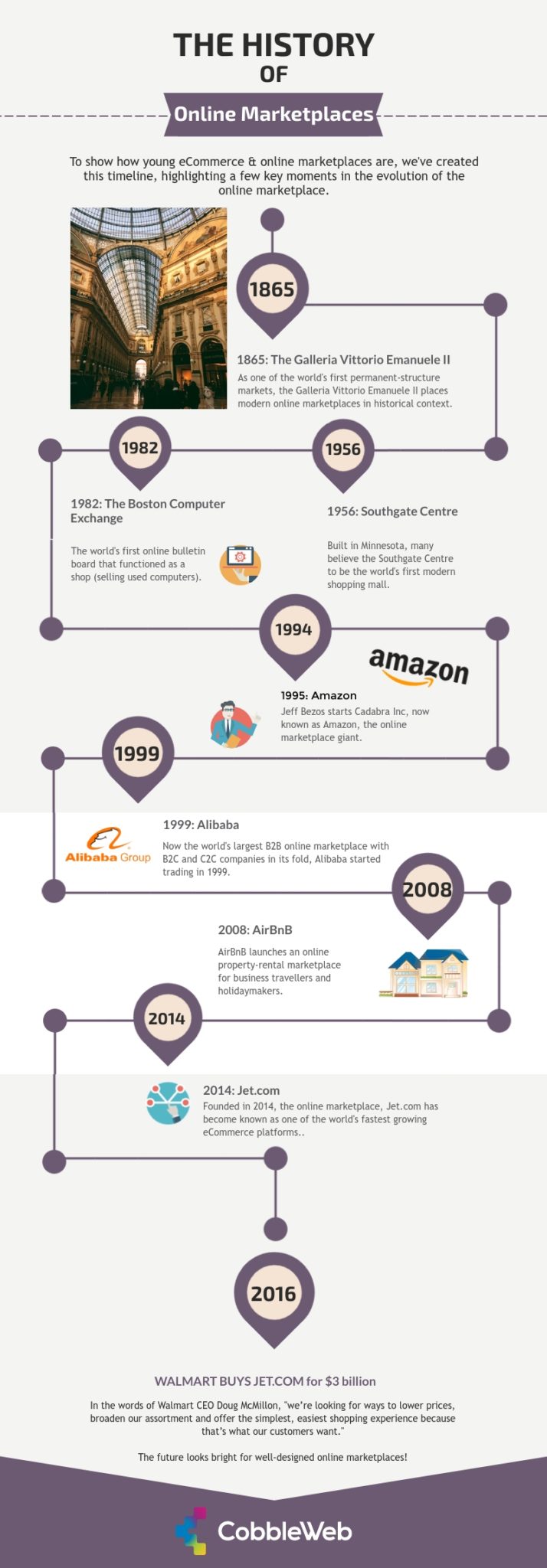
A short history of online marketplaces
The digital marketplace model is still a toddler compared to the time it took physical marketplaces to evolve from informal gatherings on the town square to today’s gigantic shopping malls. But it is catching up fast.
Since its inception in 1982, the marketplace model has rapidly grown to represent nearly 60% of online retail. And it is still growing at breakneck speed!
In 2025, global GMV for the top 100 retail marketplaces was expected to jump by another 20% to $5 trillion* in 2027.
[ *excludes the four-times larger B2B marketplace opportunity ]
And of course, online marketplaces are not only limited to physical goods. Service marketplaces — e.g. peer-to-peer rentals like Airbnb, on-demand apps like MobyPark, delivery platforms like MealMap, freelance sites like Upwork, and asset management ecosystems like Nestify — are projected to grow at 16% per year.
Despite its explosive growth, the online marketplace model is still relatively new.
Why do online marketplaces fail?
Not every marketplace startup turns into an Amazon or an Airbnb though. Amidst the frenetic growth of ecommerce models such as online marketplaces, many most newcomers fall off the bandwagon.
According to Clayton Christensen, the originator of disruptive innovation theory, about 95% of new products fail. His claim is supported by research from the American Small Business Administration: only 10% of startup businesses are still in operation after 18 months. But why?
“the reason most people fail to activate financial sustainability (the first level of success) from their initial business efforts is because they have NO IDEA what they are doing.”
Steve Chapman, founder of DIYBusinessClasses.com
Harsh words, but lack of experience and expertise explains the two biggest reasons why marketplace startups fail:
- Insufficient product-market fit
- Using the wrong technology to create your marketplace
Without the right tech stack, it becomes very difficult to validate product-market fit — the extent to which your solution solves sufficient numbers of users’ needs in a profitable manner. That’s because the tech stack should support your unique business case, which includes user flows, revenue streams, and target markets. It should also scale easily as your marketplace grows after achieving product-market fit.
Turnkey Marketplace Builder vs Software Development Agency: 10 criteria to consider
Unless you have a platoon of top-notch in-house developers, there are two main ways to turn your marketplace idea into a reality: use a turnkey website builder (SaaS solution) or partner with a development agency (custom solution). But which technology option is best to create your online marketplace? Let’s compare their pros and cons to find out which one comes out on top.
In the left-hand corner . . .
Online Marketplace Builders
Marketplace builders are plug-and-play software platforms that make it easier for non-developers to create multi-vendor websites without coding. This includes general commerce platforms like Shopify and WooCommerce, which enable multi-vendor functionalities via plugins, and dedicated marketplace software like CS-Cart and Sharetribe. Online marketplace builders usually operate as SaaS platforms that offer pre-developed (turnkey) features and templates on a subscription basis.
And in our right-hand corner . . .
Software Development Agencies
Software development agencies design, engineer, test, and improve digital products. The really good ones provide tailor-made solutions that solve specific business goals and challenges in an optimal manner. Most software agencies focus on specific product niches with some specialising in the development of custom online marketplaces. They usually charge on a time-and-materials basis payable in tranches as pre-agreed milestones are reached. Rates will vary according to the level of expertise required for a particular project.
Round 1: Speed

Marketplace Website Builder:
If you’re not too picky about your design template and you only have a few basic products to set up, you could easily have your first version ready in less than a week. Of course, that doesn’t mean your target market can or want to actually use it since you skipped the discovery phase.
Software Development Agency:
The timeline of a custom development process is subject to a number of factors. At what stage is your marketplace concept? Do you have an existing MVP up and running? How many features do you need? How complex are those features? Are there budget constraints on the number of development resources that can be utilised? In general, a first version MVP will take three to nine months.
Winner: Website builder
Round 2: Cost

Marketplace Website Builder:
Depending on your marketplace’s requirements, the prices vary from free to over £300 a month. If you want a custom domain with unlimited vendors, products and transactions, you’re looking at an average of about £200 per month.
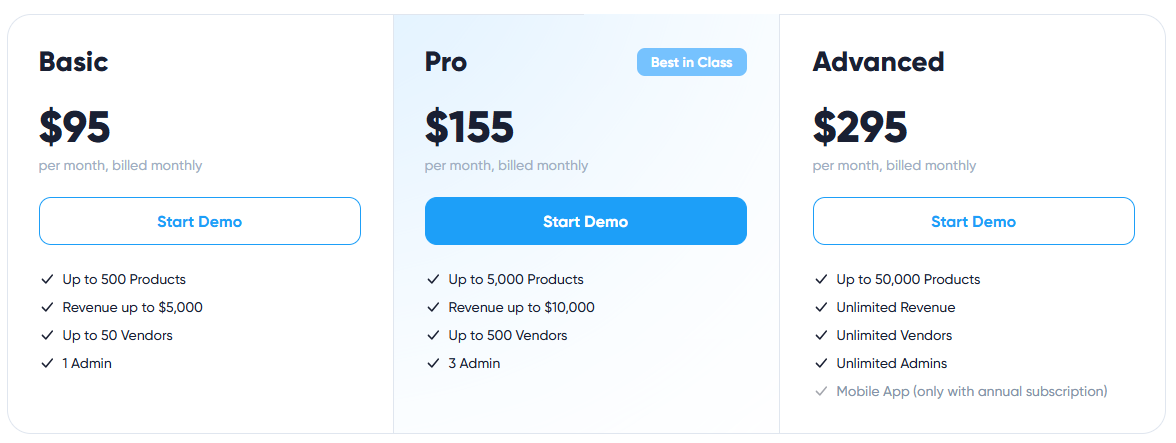

The big concern with subscription-based software costs, however, is that they can pile up quite quickly. Most website builders offer a cheap basic plan that can help you create a website, but to get the required features for a marketplace you must add pricey plugins, pay transaction fees and continuously buy more to get more.
After a year, your basic application’s costs could pile up to over £2,400 without ever reaching a fully-featured marketplace. In ten years you will have spent over £24,000, which is about the time it took Airbnb to become the multi-billion dollar company it is today.
Software Development Agency:
If you need a basic marketplace, entry-level software agencies can have a high-fidelity MVP up and running for around £20,000. Costs can vary quite a bit though, depending on the number and complexity of features.
The number of iterations required to validate assumptions and reach product-market fit will also have an impact on cost. It is therefore recommended that you plan a budget that is aligned with the milestones on your product roadmap, instead of focusing on a once-off cost.
An experienced marketplace developer that follows a lean iterative approach can minimise financial risk and increase success rates. In particular, they help you break down your product roadmap into transparent components — features, epics, and user stories — that can be prioritised within budgeted milestones.
Winner: Website builder (if you manage to avoid all the hidden costs)
Round 3: Ownership

Marketplace Website Builder:
Your monthly payments mentioned above is a subscription fee. It functions similar to a rental, since you pay recurring fees for access to hosting, software services, and online real estate. You therefore never truly own your application and can’t sell it. Should you choose to quit your marketplace builder, or heaven forbid it goes bust, you lose everything.
Fortunately, not all online marketplace builders work this way anymore. Sharetribe, for example, allows you to export your online marketplace source code. If you choose to install this on your own server, it can continue to run as it did. As you will no longer be able to use the web builder’s CMS or customisation tools to make changes, you will have to hire proficient developers in order to customise your site, but the site itself will be your property.
Software Development Agency:
When you pay for your product, the product is yours. This means that the application and its source code belongs to you and as with websites exported from website builder software, you can install this on your own server and run it as you please. For editing and customisation, you can either request that a CMS type portal be built alongside your online marketplace or you can commission the software development agency or hire your own developers to make ad hoc changes as you need them.
Winner: Tie
Round 4: Flexibility

Marketplace Website Builder:
Marketplace builders generally allow you to customise the appearance of your site, with some offering thousands of website templates or themes to choose from. You can arrange basic page layouts, change colours and fonts, and upload your own images to create a custom look that matches your brand. Some marketplace web builders even allow you to create custom HTML and CSS code to further tweak the way your site looks.
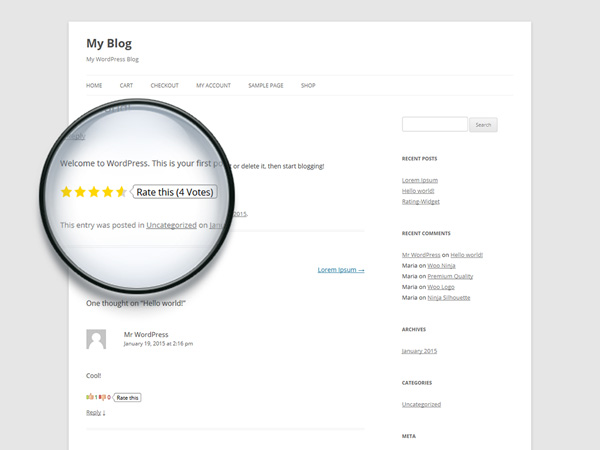
For feature customisation, website builders rely on a plethora of plugins and widgets that can extend the functionality of your multivendor website to include features like ratings, appointment bookings, shopping carts, and more. However, these tools are set up to cater for common scenarios, offering for example a rating out of 5 stars, not the 10-point system you had in mind. A booking calendar plugin is another good example; it might not offer discounted bookings made six months in advance as per your business model.
Mobility can also be a problem. In some instances, your previous work will be lost when you switch from one template to another, making it a challenge to move your content seamlessly to the new design. This makes it difficult to experiment and improve in a continuous manner.
Your technology options are also limited. Should you choose to export your site and hire developers to do customisation, they will be locked into the technology used by the website builder software.
Software Development Agency:
Design and feature-wise, your product can be exactly what you want it to be, as it is tailor-made to your specifications. Should you choose to redesign your marketplace, the development agency can easily reuse previous content.
If you decide to continue customisation of your marketplace in-house or with a different development agency, you will also experience some technology lock-in, but you will have had the advantage of choosing which technology to use from the start.
Consultation with a development agency helps you identify the tools and coding language best suited for your project and allows you to select technology that you are comfortable with. If ever the time comes that you choose to move your online marketplace away from your initial development partner, you will be familiar with the tech it uses and will be able to hire new developers accordingly.
Winner: Dev agency
Round 5: Solving your business problem

Marketplace Website Builder:
Should you choose to build an online marketplace with a turnkey solution, we suggest conducting plenty of research into the capabilities of your preferred platform to determine whether or not the website builder meets your demands. If you discover a lack of functionality later on, you will have wasted a lot of resources rowing in the wrong direction.
Website builders do not offer help with aligning your technology, user flows or platform features with your target market. This may result in a product that does not fit your market or does not properly solve its problems.
Software Development Agency:
Software development companies can align your business goals with the right features supported by a suitable tech stack. For example, would a relational database like MySQL or a non-relational database like MongoDB be best for your business model?
In addition, they build the back-end logic that successfully supports the required user interactions. This bespoke approach can deliver powerful competitive advantages via custom automations and algorithms.
Experienced development agencies should validate your business model throughout the development process using accurate data. By identifying the right metrics and tracking user interactions with the application you can make an informed decision for each new version. This iterative approach, which results in continuous improvements to the platform over short periods of time, ensures they build the right infrastructure for your business model and meet users’ needs.
Winner: Dev agency
Round 6: Support

Marketplace Website Builder:
The support you receive depends on the marketplace builder you are working with. Popular website builders have thousands of users, many of whom are active on community forums and discussion threads on portals like Quora and Stackoverflow. There are also builder-specific knowledge bases, FAQs and tutorial videos which can be very helpful.
Should your issue be a bit more complex or specific, you will need to log a ticket with the website builder support team or send them an email. As one of thousands of users, your issue might not be dealt with quickly or effectively.
Software Development Agency:
As with online marketplace web builders, the support you receive depends on the tech partner you are working with. That being said, you can expect plenty of face-time with your software development agency, regular updates on the project, and personalised responses to your queries.
Tech partners invest in their clients. They analyse your business model and product-market fit to better understand your vision. Only then can they begin to build the right product. When it comes to technology, software development companies play a guiding role, helping you to understand the process and the product. Service level agreements are also usually included in the development contract, making sure your requirements are defined and prioritised.
Winner: Dev agency
Round 7: Extensibility

Marketplace Website Builder:
Extensibility refers to the addition of third-party features and functionality. Adding popular features to online marketplaces built with turnkey software is usually a quick and painless process via plugins and widgets. Should you wish to integrate more advanced features, such as automated property access, custom navigation or real-time inventory synchronisation with multiple seller systems, it gets complicated, often impossible. If the integration requires coding work, your request can take months to be implemented . . . if ever.
Adding a native mobile version can be challenging with a marketplace builder. Although sites built using website builders are usually mobile friendly when viewed in a web browser, native apps (downloaded from Google Play or the iOS App store) offer several additional advantages: offline access, push notifications, and deep device integration. They can be created using tools like Cordova, but you will still need a team of developers to export your site, make adjustments and construct the application. A lopsided approach that not only costs time and money, but also compromises the quality of your application.
Software Development Agency:
When you share your online marketplace vision with a software development agency, you are encouraged to paint the big picture. This assists them to build the correct foundation. This will save you from structural issues later on when you want to add more features and functionality.
Experienced software developers build marketplace applications with extensibility in mind. It depends on your chosen partner, but if they are worth their salt, most integrations with other software or hardware components should be possible. Similarly, extending your offering to mobile applications for Android and iOS should be relatively painless.
Winner: Dev agency
Round 8: Scalability

Marketplace Website Builder:
Scalability refers to your application’s ability to handle more traffic in the form of platform interactions, transactions, data storage, and user onboarding. Online marketplace builders have strong infrastructure capable of handling high volumes. However, in most cases you are sharing the available resources with thousands of other users. When you hit a resource bottleneck, you are encouraged to upgrade your subscription plan to obtain more storage space or the capability to handle more traffic. In the end, you get what you pay for.
Should you decide to move your application from a shared infrastructure to a dedicated option either offered by the marketplace builder or set up and maintained by your own team, you will need to jump through additional hoops. These include moving your data from one database to another or re-installing all your plugins to reach your product at its new destination.
Software Development Agency:
An experienced software agency will make sure at the planning and design stage that your marketplace platform infrastructure and architecture are geared for growth from the outset. This includes making sure that unique demands such as database query types and volumes are met.
It depends on your chosen tech stack and marketplace stage, but it is quite rare to share your infrastructure with other clients as you would with a marketplace builder. In any event, you will not be sharing with nearly as many clients and you have the option to request more powerful infrastructure whenever the need arises. Requesting a dedicated infrastructure will add to your costs, but your tech partner should be able to move your marketplace from one infrastructure to the other fairly easily.
Winner: Dev agency
Round 9: SEO

Marketplace Website Builder:
Website builders tend to claim that online marketplaces built with their software provide extra search engine optimisation and as such, are more likely to appear in Google search results. According to Jeremy of Website Builder Expert, this is not true. You can read about a clever experiment they tried comparing Wix with WordPress here.
And of course, website builders don’t provide you with optimised viral content that will drive people to your marketplace in droves.
Software Development Agency:
Some software development agencies do have SEO specialists that can help you with on-page content optimisation, but that usually falls outside the remit of a development project. You would probably be better served by a dedicated content marketing expert for on-page SEO.
However, development agencies can play a powerful role in the technical aspects of SEO. Technical SEO includes all the structural and performance elements that help search engines crawl, index and present your content.
For example, have you ever wondered why some search results have star ratings and others not? That’s because the developers made sure to include rich snippets (aka structured data markup) in the application’s code. It helps search engines to grab deeper details from your web pages and present them in a more attractive and informative manner in search results.

Other important technical SEO elements include URL structure, site architecture, mobile-friendliness, redirects, and of course site speed (which you will shortly see is not exactly web builders’ forte). You can learn more about technical SEO for marketplaces in our comprehensive guide: Technical SEO – the hidden engine of marketplace growth
Winner: Dev agency
Round 10: Performance

Marketplace Website Builder:
Due to the powerful infrastructure mentioned above, online marketplaces built with website builders should have quick server response times. That said, the existence of countless performance optimisation companies like Speedboostr for Shopify tells a different story.
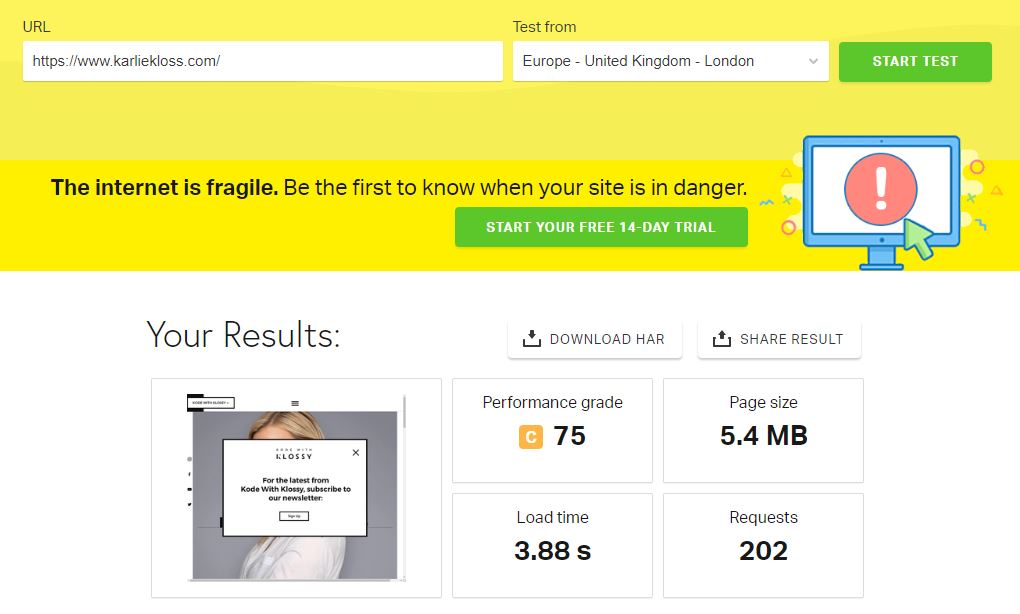
Performance issues with marketplace builders could be due to bloated infrastructure (trying to be all things to everyone), but also using too many features and plugins. When you install a plugin on your site, chances are you only need part of what it offers. For example, a media plugin may offer multiple features such as carousels, an image editor, as well as support for file types that you do not use. Only part of the plugin serves a purpose; the rest is dead weight that can slow down your site.
Software Development Agency:
Software development agencies worth their salt will always prioritise platform performance by aligning the tech stack and feature set with the business case and user needs. For example, an image-heavy retail marketplace like Airbnb uses Redis as an in-memory database to reduce latency, while ride-hailing app, Uber, uses it for both caching and queuing to handle large amounts of real-time requests.
Winner: Dev agency
Overall winner: software development agency
There you have it. A qualified software development agency trumps DIY marketplace builders in seven out of ten criteria, while turnkey solutions have the edge in speed of implementation and cost. Even that may be a risky proposition though, as an inflexible, unscalable turnkey solution may very well lead down an endless rabbit hole – costing you lots of time and money.
But let’s not throw the baby out with the bathwater. Off-the-shelf or DIY marketplace builders have their place. They can be useful tools at the very beginning of your online marketplace journey, when you want to test your idea — as we explain here.
However, if you are a bit further down the road and looking to deepen product-market fit or scale your marketplace, a custom solution will almost always give you a better chance at success.